Last Updated: September 1/2026
Pilates studio insurance is a package of business coverages—general liability, professional liability, commercial property, equipment breakdown, business interruption, and workers’ compensation—that protects a Pilates studio from the financial cost of client injuries, apparatus damage, employee injuries, and lawsuits. Coverage is sized to a studio’s apparatus inventory (reformers, towers, chairs, and barrels), class format, and instructor certification levels rather than to a generic small-business template.
Quick answer: Most Pilates studios combine six core coverages into one program. General liability alone typically costs $500 to $1,500 per year, and total premiums rise as property, professional liability, equipment breakdown, business interruption, and workers’ compensation are added. NEXO Insurance Services underwrites each Pilates studio individually and quotes workers’ compensation in 46 states.
Six core coverages make up a typical Pilates studio program.
$500 to $1,500 per year is the typical cost of general liability alone.
46 states — NEXO quotes workers’ compensation nationwide, with payroll-tax filing available.
Since 2005, NEXO has specialized in insurance for fitness and movement businesses.
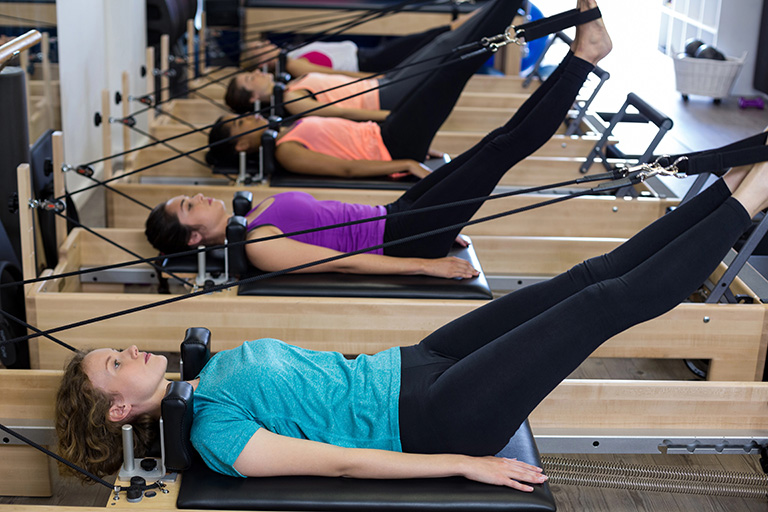
What does Pilates studio insurance cover?
A complete Pilates studio program is built from six core coverages. The table summarizes each, and the sections below explain when each one responds.
| Coverage | What it protects against | Who needs it most |
|---|---|---|
| General liability | Client slips, falls, and bodily-injury or property-damage claims on your premises | Every studio |
| Professional liability | Claims that instruction or programming caused or aggravated an injury | Every studio and instructor |
| Commercial property | Fire, theft, or vandalism damage to your space and apparatus | Studios that own or lease space |
| Equipment breakdown | Mechanical or electrical failure of reformers, chairs, and apparatus | Apparatus-equipped studios |
| Business interruption | Lost income while you’re closed after a covered loss | Studios reliant on class revenue |
| Workers’ compensation | Medical costs and lost wages when an employee is injured on the job | Studios with employees (required in most states) |
General Liability Insurance
General liability insurance covers third-party bodily injury and property-damage claims—for example, a client who slips on your studio floor. It pays medical costs and legal fees when someone is hurt on your premises, and it is the baseline policy every Pilates studio needs.
Professional Liability Insurance
Professional liability insurance (also called errors and omissions) covers claims that your instruction or programming caused or worsened an injury, such as a client alleging a cue aggravated a condition. It pays defense costs and damages that general liability does not.
Commercial Property Insurance
Commercial property insurance covers your space and equipment against fire, theft, vandalism, and certain disasters, including reformers, mats, and other apparatus. It pays to repair or replace what is damaged whether you rent or own your studio.
Workers’ Compensation Insurance
Workers’ compensation insurance covers medical costs and lost wages when an employee is injured or becomes ill on the job, and it protects you from related lawsuits. Most states require it once you have employees.
Business Interruption Insurance
Business interruption insurance replaces lost income while your studio is closed after a covered loss, so you can keep paying rent and payroll during the closure.
Equipment Breakdown Insurance
Equipment breakdown insurance covers repair or replacement when apparatus fails from a mechanical or electrical cause rather than an insured peril like fire. For studios that depend on reformers, chairs, and barrels, it keeps a single breakdown from immediately cutting class capacity.
Also Read: Top 8 Reasons to Have Pilates Studio Insurance
How To Choose The Right Insurance For Your Pilates Studio
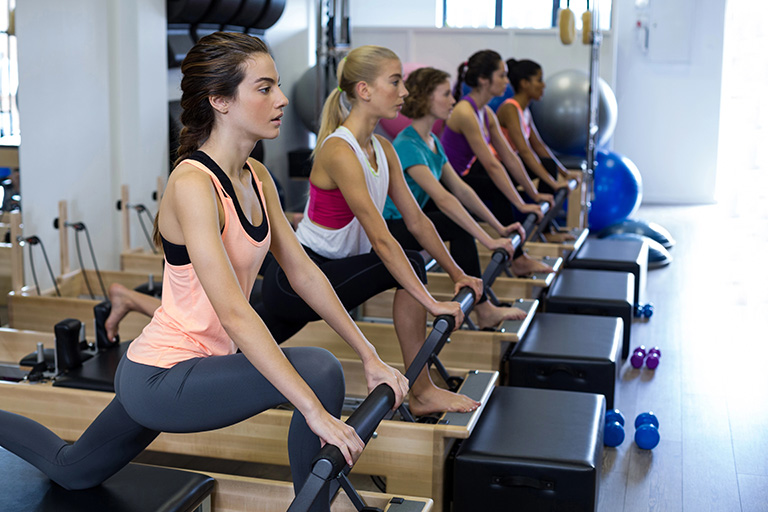
Selecting the right insurance for your Pilates studio depends on a variety of factors, including the size of your studio, the number of clients you serve, and whether you offer any additional services, like online classes or private instruction. Here are some steps to help you choose the right insurance:
1. Assess Your Risks
Map your client volume, apparatus, and whether you rent or own—this determines which coverages are essential.
2. Check Legal Requirements
Workers’ compensation is mandatory in most states once you have employees; confirm your state’s rules.
3. Consult a fitness specialist broker.
A broker who underwrites studios rather than generic small businesses will match coverage to your apparatus and class format.
4. Compare coverage, not just price.
Don’t settle for the first insurance policy you find. Compare different options to ensure you’re getting the best coverage for your money. Be sure to look at policy limits, deductibles, and exclusions to fully understand what is covered and what isn’t.
5. Review annually.
Check limits, deductibles, and exclusions – especially prenatal, online class, and shared space exclusions.
Also Read: Common Challenges Pilates Studio Owners Face
The Cost of Pilates Studio Insurance
Most Pilates studios pay $500 to $1,500 per year for general liability alone, with total cost rising as property, professional liability, equipment breakdown, business interruption, and workers’ compensation are added. Because a mat-only studio and a fully-apparatus studio carry very different equipment values and injury profiles, NEXO quotes each studio individually rather than from a rate table. Premiums are driven by:
- payroll & employees
- apparatus inventory
- class format (group vs. private)
- client mix (prenatal/rehab)
- own/lease/sublease
- location & claims history
💡Deep dive this topic: The Importance of Professional Liability Insurance for Pilates Instructors
💡Deep dive this topic: Workers’ Compensation Insurance for Pilates Studios: What You Need to Know
💡Deep dive this topic: Protecting Your Pilates Studio Equipment with Property Insurance
Contact us today to review policy and coverage options for your Pilates studio.
Why choose NEXO for Pilates studio insurance?
NEXO Insurance Services is a Managing General Agent that has specialized in fitness and movement businesses since 2005. NEXO underwrites Pilates policies around apparatus inventory, class format, instructor certification levels, and any shared or subleased space, rather than adapting a generic small-business template. Its property coverage was designed specifically for fitness facilities which matters when a single reformer represents several thousand dollars of scheduled equipment—and NEXO quotes workers’ compensation in 46 states with payroll tax filing available alongside it.
Frequently Asked Questions
How much does Pilates studio insurance cost?
Cost depends on your payroll, how much apparatus you run, whether you teach group reformer or private sessions, your client mix, and your claims history. A mat only studio insures very differently from a fully equipped apparatus studio with reformers, towers, chairs and barrels, because the equipment value and the injury profile are both higher. NEXO Insurance Services quotes Pilates studios individually rather than from a rate table, since apparatus inventory alone can move the number substantially.
Does my policy cover injuries caused by reformer springs, straps or carriages?
Usually yes under general liability if the injury results from normal use, but a claim tied to a worn spring, frayed strap or failed carriage stop moves toward a maintenance question rather than an accident. That is where your inspection records matter. Studios that log apparatus checks monthly, with dates and initials, are in a substantially stronger position than studios that inspect informally.
What happens if a reformer breaks down and I have to cancel classes?
Equipment breakdown coverage handles the repair or replacement when the cause is mechanical or electrical failure rather than an insured peril like fire or theft. Business interruption may respond to the lost income if the closure follows a covered loss. Pilates studios feel this harder than most fitness businesses because taking two reformers out of service can cut class capacity immediately rather than gradually.
Am I covered if I rent a room inside a gym or wellness center?
Not automatically, and this is one of the most common gaps for Pilates instructors. The host facility’s policy covers the host facility. You generally need your own coverage, and the landlord or gym will usually require you to name them as an additional insured. Confirm before your first class rather than after, because retroactive certificates are difficult to obtain.
Do independent Pilates instructors need their own insurance if they teach at my studio?
In most cases yes. Your studio policy may not extend to a contractor’s instruction, and their policy does not automatically extend to your business. Ask every contracted instructor for a certificate of insurance naming the studio as an additional insured, and collect it during onboarding rather than after an incident.
Pilates is low impact. Does that mean lower premiums?
Not as much as owners expect. Low impact reduces some injury types and not others. Apparatus work involves loaded springs, moving carriages and clients in unstable positions, and a meaningful share of Pilates claims involve equipment rather than exertion. Insurers price the apparatus and the instruction, not just the intensity.
What coverage do I need for prenatal and postnatal clients?
Standard professional liability generally responds, but the exposure is higher because contraindications are more specific and a claim involving pregnancy tends to carry more weight. Document instructor training in prenatal modifications, keep a clear intake process, and confirm your policy has no exclusion tied to prenatal instruction.
Am I covered if a client is referred by a physical therapist?
This is the scope of practice question and it is worth confirming with your agent. Teaching a client who happens to be in rehabilitation is instruction. Designing a program to treat a diagnosed condition moves toward clinical practice, which most Pilates certifications and most professional liability policies do not cover. Keep the referral relationship documented and the treatment decisions with the referring clinician.
Does my certification level affect my coverage?
It can. Some carriers distinguish between mat certification and comprehensive apparatus certification, and teaching apparatus without the corresponding training can create a coverage question if a claim follows. Keep certification records for every instructor on file and update them when someone completes new training.
Do I need workers’ compensation for instructors who teach two classes a week?
Usually yes if they are employees rather than genuine contractors, since the obligation attaches to employment rather than to hours. Requirements vary by state and some set thresholds by employee count. The more common problem is instructors classified as contractors who work fixed schedules under studio direction. NEXO Insurance Services quotes workers’ compensation in 46 states with payroll tax filing available alongside it.
Does my insurance cover online or on demand Pilates classes?
Not automatically. Virtual instruction removes your control over the client’s surface, equipment and supervision, and storing health intake or payment data on a platform can raise a cyber exposure. Confirm coverage before launching a streaming or on demand offering rather than after a claim raises the question.
How does NEXO Insurance Services cover Pilates studios?
NEXO Insurance Services is a Managing General Agent that has specialised in fitness and movement businesses since 2005. Pilates policies are underwritten around apparatus inventory, class format, instructor certification levels and any shared or subleased space, rather than adapted from a generic small business template. Property coverage was designed specifically for fitness facilities, which matters when a single reformer represents several thousand dollars of scheduled equipment.
Reviewed for insurance accuracy by NEXO Insurance Services. California Broker/Agent License OG51267; California Agency License OE14627.
Last reviewed: September 2026.